
Ave!
Hrizg we have released these t-shirt models. It is a limited edition of these models, so you have to hurry if you want one.
Write now to labarosrecords@gmail.com


Press
Ave!
Hrizg we have released these t-shirt models. It is a limited edition of these models, so you have to hurry if you want one.
Write now to labarosrecords@gmail.com

Ave!
El día 5 de diciembre (jueves) tendrá lugar en Unquera (Asociación Cultural los Bancos de Atrás – Devarock) la fiesta de la edición del primer álbum de Triskelion llamado «Triumph of Misanthropy».
Esto ocurrirá a partir de las 18:00 y la entrada es gratuita. Allí la banda podrá vender material, así como firmar CDs o lo que sea, mientras escuchamos el disco, hablamos, bebemos… También habrá puestos de Ultraviolencia y Morbid Shrine Prods y venta de más material Underground.
Estas fiestas eran comunes en los 90s y no a dia de hoy, pero nosotros vivimos el Metal antiguo, así que esto es lo que es.
NO HAY CONCIERTO. El concierto de presentación tendrá lugar el 21 de diciembre en el mismo lugar y junto a los madrileños Termogaunt. Id afilando las hachas!


1. ¿En qué momento nace Triskelion y bajo qué necesidades? Cuéntanos un poco la génesis de la banda.

Nuberum
«En celtiberia no hay lugar para paganismos nórdicos que no tienen nada que ver con nuestra tierra ni los satanismos “guays” de la Iglesia de Satan, el Templo de Seth, ni ninguna confesión que tenga que ver con LaVey».

Kelio


Ave!
The new album of Opposer, entitled «Darkest Path», is between us. After of some years of hard working in the rehearsal place and showing their power on stages of all Spain, they’re back with a dark, deep, raw and melodic album which influences of Sodom, Kreator, Obituary, Paradise Lost, Hypocrisy or Sepultura can be heard.
Recorded again in their own studio «Peñacastillo Sound Lab», they talked with Erun Dagoth to do the mix and mastering in his Khazad-Dûm Studios (Deprive, Moonshine, Hrizg, Briargh…). The result is a very aggressive and mid tempo mixture between Death Metal old school and Thrash Metal in the old vein.
«Yeah, the album has turned into a darker sound. This is the main reason of some stylistic changes in the art and everything in the album». Has stated Jose, lead vocals and guitar. Iván (drums) has said «Everything has been in a natural way, we are more into ‘Death’ sounds than ‘Thrash'».

This time, the artwork was done by the talented artist Enserune (Hrizg, Neverendinghate), who have worked for Deprive or Edenkaiser, between others, showing a new horizon in Opposer‘s path into a darker and more Death Metal sound as they have talked before. A superb point from which the rest of the layout have been continued.
Other mention should be done for KBK Photography (nachobuki@gmail.com) taking another step forward. But special mention goes for Frunfo Films and Felipe Gómez-Ullate and his brutal videoclip with the song «Straight to Hell». A total hit done with excellent taste and proffesional touch.
Then, ok. Finally, the long awaited second album of Opposer is here. A great tune that can be get in CD for 12€ (Spain) or 15€ (rest of the world) with postal costs (in registered mail) included.
Also, a digital copy is available in our bandcamp. But «Darkest Path» will be available for iTunes, Spotify and much others very soon.


1. Straight to Hell
2. Osiris Land
3. Agony
4. Holy Lies
5. Wrecking Low
6. In the Silent Dawn
7. Bloodstock
8. Under my Skin
9. Satanas
10. Ashes to Ashes


MS: Hello, how is everythig there? Tell us… what is Foul Entity?
FE: Hey! Fine we just came back from our live in Patra,which was our first show since 6 months. Foul Entity is a Death Metal band from Athens,Greece in the vein of Asphyx,Entombed,Incantation and more and was formed in late 2014. We played our first live show in January 2015.
 MS: Your first release “Putid Despair” is imminent. What will find the public in this album?
FE: Putrid Despair is our first release which is a 3 track demo album recorded live,but on the Morbid Shrine release you will also find 3 new bonus tracks,which are different than our first tracks.
MS: “Putrid Despair” sound like a brutal lamentation, however which are your lyric themes? How was the creation process of this demo?
FE: All songs and lyrics are written by our vocalist Kostas, who actually formed the band. The lyrics are just about brutality,darkness,despair…evil stuff mostly, at first it was just random lyrics.
MS: Why did you choose a “rehearsal demo” as first released format?
FE: When the line-up of the band was ready for a live performance we decided that we wanted to record some songs fast, so we just entered the rehearsal room at Made in Hell studio and recorded live. We think it sounds great if you consider it is a live recording and that it was just the 3rd or 4th rehearsal we ever made.
MS: And of course, why did you sign for Morbid Shrine? Was your vision of underground scene the reason?
FE: We were looking for a label to release it. I already knew about Morbid Shrine so we contacted the label.
MS: Is the actual situation of Greece making any difference in the way you are focusing your music?
FE: I wouldn’t say you can notice it directly through are music, but i think the situation helps us to write some pissed off death metal.
MS: The artwork looks killer! Who was the author?
FE: Our vocalist Kostas made both the logo and the artwork.
MS: Which are the future plans of Foul Entity?
FE: Soon our demo »Putrid Despair» will be released through Morbid Shrine. After that we plan to release ome split albums, one is already on the way with a brutal band and soon we will have more details about it.
MS: Thank you for your time. Any last words for the readers?
FE: Make sure to check us out, more to come from us soon. Thanks for the interview! Cheers!
Questions: V.
Answers: Matt Mann

En los últimos años, Cantabria ha ido mirando, como en otras comunidades del norte peninsular, hacia su antiguo pasado prerrománico, medieval y mitológico, con muchas referencias culturales de todo tipo. La música ha sido una de ellas, influenciando dicho pasado a diversos estilos; ya sean tradicionales, como el propio folk escuchado en los pueblos y su mezcla con música propiamente celta o medieval; o bien penetrando en otros más contemporáneos como rock e incluso el metal.
En este caso tenemos entre manos el proyecto personal de Erun, llamado Briargh que se sumerge profundamente en las raíces de Cantabria, tanto en su historia antigua como en el impacto personal que transmite su naturaleza y clima. Todo a través de la música y concretamente a través del metal extremo en varias vertientes.
Tras salir de un grupo volcado en el Pagan Metal cántabro como CrystalMoors, y con más historias musicales entre sus zarpas, Erun decidió centrarse en otro proyecto que ya había puesto en marcha relacionado con la mitología cántabra de una forma mucho más personal y oscura, junto con otros conceptos musicales que ya iba desarrollando en sus otros grupos, dando lugar a la modelación de Briargh y a la salida de su último disco llamado Eboros.
El resultado es un trabajo de pagan metal de raíces celtas, combinado con muchas partes de black metal, llevándonos por un viaje melancólico y nostálgico por Cantabria, sobre todo a partir de medios tiempos de guitarras melódicas, voces desgarradas evocando desesperación y tristeza en tres idiomas diferentes: (castellano, inglés y protocelta), con una sonoridad cruda y pútrida cual tronco del roble carcomido por la humedad y el tiempo (qué profundo me ha quedado esto). La unión de estos aspectos nos lleva a una sensación de desolación y penumbra interior muy bien trabajada, retocada con la utilización de teclados y samplers empleados adecuadamente en diversos pasajes instrumentales y formando parte de varios temas; La aportación femenina a las voces de Enserune, profundiza en ese mal rollo melancólico que nos deja el disco. Quizá la parte menos compactada pueda ser las rítmicas de batería, por ser un tanto repetitiva en ciertos patrones, aunque la producción primitiva de la misma creo que es acertada.
En general se nota cierta madurez en todo el conjunto compositivo, como consecuencia de un desarrollo sólido del proyecto: un aspecto muy importante en este estilo, del cual creo que muchos grupos no consiguen transmitir y adolecen de falta de personalidad.
Comentario por Sewin
Font: http://www.nochederock.com/discodelasemana/detalle.php?id=1026
Another great review, this time from UK, here: https://thoseonceloyal.wordpress.com/2016/03/02/review-briargh-eboros/

Briargh are a band that I can only describe as brilliant; formed in Spain back in 2003, the one-man band have become an amazing mixture of black, death and folk metal, and does it in a way which can only be described as brilliant. Focusing on themes of paganism, mythology and history, the band are back with a new full length album entitled Eboros. A beautiful album with a mixture of beautiful melodies and riffs, hard-hitting and rough drums, as well as dark, screeching, Hellish vocals which adds power and energy into such a powerful album.
The first track on the album, “El Lianto Del Bosque”, starts off with Burzum-sounding guitar melodies which mix beautifully with fast, heavy drums. When the deep, dark vocals start; the melodies and riffs quicken which add to the heaviness of the track. A track complete with different tempos add volume and depth to the track, and it is a brilliant start to the album.
Another track on the album which really stands out for me is the third track entitled “Sword of Woe” which for me is a perfect example of black metal infused folk metal. A song mixed with heavy vocals and female vocals and the mixture of the melodies and riffs on this track have already captivated me in a beautiful, enriched manor. Everything on this track is as heavy as anything including the vocals, melodies, riffs and drums. What really captivates me on this track is the “Whoa-wo-wo” clean vocals part of the track which makes folk metal really stand out on this track in a seamlessly beautiful way. This track for me works amazingly well and it is a track of complete perfection on the highest point.
“El Canto De Las Anjanas P.T II” is the sixth track on the album complete with hard-hitting drums beautiful melodies and riffs and raw heavy vocals kick off the track. Throughout the song can be heard slower riffs and melodies with heavier vocals adding power to this track. There is also a mixture of fast-paced instruments and tempo changes which add incredible beauty to this amazing piece of art. Keyboards and synths also come into work in this track which again just adds to the folk metal theme. This really is just a work of 100% perfection, and the use of the keyboards and synths add more beauty to an already beautiful track.
The last track on the album “Eboros – Epitome of Deat” for me was the best 5 minutes and 58 seconds of my life, a track that starts off with heavy keyboard and synths which almost sound like Summoning. Throughout tempo changes a beautiful keyboard melody can be heard behind what sounds like a male choir which gives off a mystical element on the track, when female vocals start the mystical element of the track, gives of pure beauty. As the female vocals end and synth melodies pave the way for heavy drums, bass and guitar riffs which makes the track seem darker and adds to the power behind the track. As the dark powerful screeching vocals enter the mystical element of the track may be washed away but the rawness and the power of the album remain right until the end.
A beautiful album which keeps on giving right to the end, an album that can only be described as flawless, perfect and beautiful a magnificent piece of art which is written in such a way where everything fits in this album (including instruments and vocals) flawlessly in an absolutely incredible album.
Original font: http://www.moshville.co.uk/album-review/2016/02/review-briargh-eboros/
Eboros album released on October 27th, 2015, Morbid Shrine Productions. The music comes through with pure aggression and savagery. Nothing is over-processed. A very natural sounding recording is captured. Interesting aspects of the arrangements is how well the two guitar tracks compliment each other and trade of rhythms.
The song «Eboros – Epitome of Death», has a captive and creative keyboard piece along with female vocals complimented with a clean strumming guitar. A thing to note, these songs are all in spanish. It is the first time I have heard black metal with spanish lyrics, it fits well and adds a different dynamic to the album.
The drums have a natural sound and it is actually good to hear how intense the string parts are pronounced with the relentless battery of blast beats.
Final thoughts, if you want pure, abrasive and from deep in the underground metal music, then this is for you.
~Artemortifica
Briargh is the blackened pagan folk metal act by Morbid Shrine’s owner Dux Briargh. Influenced by acts like Burzum and Drudkh he started working on this project years ago. To me, it sounds like a very old school black metal album with several folk influences thrown in, which obviously is a good idea. It’s been awhile since I heard something like this and I have to say, I’m glad this album reached me.
What I like most about this album, is the combination of bleak black metal and the warm sound of the instruments. It’s an odd contradiction but one that works very well. This isn’t a mere blast-beats driven piece of black metal but a melodic and mysterious sounding version of the genre, highlighting in songs like ‘El Llanto del Bosque’ and ‘Dubos Etenos’. Often I’m reminded of acts like Bergthron, Windir or Falkenbach.
I really think it would be a shame if this album wouldn’t get much attention. It is a very strong example of a strange and underrated subgenre. So yes, I would like to recommend it to all the black metalheads out there, certainly the ones who love a bit of paganism and melody in their music. Nice work…
Serge
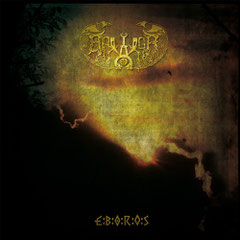
Briargh: Eboros (Review)
Artist: Briargh
Album: Eboros
Medium: CD
Stil: Melancholic Black Metal
Label: Morbid Shrine Productions
Erschienen: October 27th, 2015
Website: Briargh
Bereits der Opener «El Llanto del Bosque » prügelt gleich nach dem choralen Vorspiel los.
Schon die ersten Takte sind für eine Gänsehaut gut: Ein Einstieg, der an Intensität und Spannung reich ist und schwer fesselt – man wird förmlich eingesogen in die dunkle Landschaft von «Eboros».
«Silom Sego» ist eingängig, einnehmend und mit Hooks versehen, die nicht so schnell wieder aus den
Gehörgängen verschwinden. Hier wird das Tempo angezogen, die Bassdrum wummert vor sich hin.
Das folgende «Sword of Woe » brilliert mit seinem markanten Rhythmus, «El Canto de las Anjanas (Pt II) » ist der vielleicht stärkste Song auf dem Album, sicherlich aber, ob seiner Klasse, besonders erwähnenswert ist auch «Dubos Etenos» und «Sun of the Dead». Jede instrumentelle Einzelleistung ist
dabei beachtlich – wieder einer dieser Punkte, die jeden weiteren Hördurchlauf interessanter macht und der «Eboros» eine besondere Note gibt. Über «El Nubero de Samhain » geht´s zum Albumabschluss: «Eboros – Epitome of Death «.
Thomas Müller
Line-up
Dux Briargh – All instruments and vocals
Track list:
1. El Llanto del Bosque
2. Silom Sego
3. Sword of Woe
4. Dubos Etenos
5. Sun of the Dead
6. El Canto de las Anjanas (Pt II)
7. El Nubero de Samhain
8. Eboros – Epitome of Death
Original font: http://www.franconiametallum.de/cd-reviews/genreportal-cd-reviews/briargh-eboros/

Nature sounds and atmospheric synths start off the compilation and after the intro the music goes into a very fast and raw black metal direction that also utilizes a great amount of blast beats along with some grim screams a few seconds later and the songs bring in a great mixture of slow, mid paced and fast parts.
Most of the music is rooted in the 90’s second wave style and you can also hear synths in the background at times and when guitar solos and leads are utilized they are done in a very dark and distorted fashion and one of the tracks brings in a brief use of spoken word parts and some of the tracks are very long and epic in length while a later track brings in melodic Gregorian chants that also gives the music more of a ritualistic feeling as well as a brief use of acoustic guitars while the main focus remains more on a raw style of black metal.
Ghazghkull played a style of black metal that was very raw and misanthropic taking the 90’s style into the early 21st century and also had an atmospheric style at times which was very common for the Iberian bands of the mid 90’s, the production sounds very dark and raw while the lyrics cover misanthropy, darkness and blasphemous themes.
In my opinion Ghazghkull where a very great sounding raw and misanthropic solo black metal project and if you are a fan of this musical genre, you should check out this compilation. RECOMMENDED TRACKS INCLUDE «Avatar Of Darkness» «Witness Of Nocturnal Silence» and «The End Of The Human Race». 8 out of 10.


(English below)
1. Haz una introducción a Ghazghkull. Desgraciadamente, habrá mucha gente que ha llegado al Black Metal sin haber sabido de la existencia de tal proyecto.
Pues empiezas la entrevista con la pregunta más difícil, me resulta muy complicado definir la música que hago…
Definiría GHAZGHKULL casi como una necesidad personal, una vía de escape. GHAZGHKULL es el resultado de juntar la energía y la mala hostia de los 18 años con la decepción constante del ser humano actual.
A quien no conozca GHAZGHKULL le diría que si busca un buen sonido o un Black Metal técnico, se está equivocando, ya que los recursos de los que disponía por aquel entonces eran más que limitados, y la música virtuosa o excesivamente pensada me aburre muchísimo y no me dice absolutamente nada.
GHAZGHKULL es visceral, directo, sucio e instintivo.
 2. Hay que recordar que Ghazghkull desapareció años antes del auge de las redes sociales. Por lo visto, si no tienes presencia en ellas, no sólo no existes, sino que no has existido jamás. ¿Qué opinas tú de toda esta farsa?
Pienso que como todo, si se le da un uso correcto pueden ser de gran utilidad. El problema es cuando la gente basa su vida en estos mundos paralelos y se olvidan de lo más importante: Ser quien de verdad son, sin importar los “likes” que tenga la foto de lo que has desayunado hoy.
En la época de GHAZGHKULL también nos comunicábamos todos a través de una especie de red social, salas de chat o como se llame eso ahora. Y la verdad, por lo menos para mí, fue enriquecedor y surgieron alianzas de lo más interesantes que sin aquella herramienta nunca hubieran sido posibles.
3. Llevando más de diez años inactivo, no ha sido hasta ahora que has decidido editar un recopilatorio con todo el material que grabaste a principios del nuevo milenio. ¿Por qué ahora? ¿Crees que es hora de que retorne el Black Metal en su estado puro?
El “Black Metal en estado puro” nunca debería haber desaparecido. De hecho hay muchísimos grupos que se han mantenido fieles a aquella esencia.
La verdad es que la idea de editar este recopilatorio de todo el material de GHAZGHKULL no fue algo premeditado, sino un cúmulo de casualidades.
Un día me escribió Lavín y me dijo “están hablando de tu grupo en SPANISH BLACK METAL” entré en la página y leí con cierta sorpresa los comentarios de la gente, en ese momento me escribió Sixto con la propuesta de editar este material en su sello MORBID SHRINE PROD. Y como creo que todo pasa por algo, me parecieron demasiadas coincidencias como para decir que no.
4. Después de alguna promo o demo, y de aquel split de «Iberian Black Metal War» (Oniric 2004), junto a Mortinatum y Forestdome, ¿Por qué decidiste poner punto final a Ghazghkull? Parecía un comienzo prometedor.
De hecho nunca decidí poner punto y final, simplemente GHAZGHKULL quedó aletargado dentro de mí, quizá aguardando el momento de volver a resurgir.
En el 2004 pasaron algunas cosas en mi vida que hicieron que todo se tambaleara, eso me llevo a tomar la decisión de darle otro enfoque a las ideas que me iban surgiendo. En ese momento me volqué totalmente en ÀRNICA, que ya llevaba un par de años rondándome por la cabeza y tenía ya alguna cosa grabada.
5. Actualmente tocas en Àrnica, un grupo de Neofolk ibérico. Las diferencias son muchísimas con aquella otra encarnación del más misantrópico y oscuro Black Metal que era Ghazghkull. Supongo que te sientes más identificado con Àrnica a nivel cultural, artístico y místico pero, ¿qué hay aún de Ghazghkull en tí? ¿Aún eres un misántropo dado a las artes ocultas o dejaste de lado todo aquello para iniciarte en otras prácticas?
Bajo mi punto de vista, a un nivel estrictamente musical si hay diferencias, pero el sentimiento y el mensaje no varía tanto.
Me siento igual de identificado en ambos proyectos, si que es cierto que ÀRNICA lleva ya mucho rodaje y quizá es más acorde conmigo ahora, pero me sigo viendo reflejado en las canciones GHAZGHKULL, de hecho estos días escuchando canciones antiguas para SIGNS OF HATE, casi ni me acordaba de haber grabado eso yo, pero me sorprendió que los temas iban evolucionando tal y como los haría evolucionar si los volviese a grabar hoy mismo. Eso para mi mismo les da mucha veracidad.
6. ¿Hay planes de resucitar Ghazghkull o sientes que dijiste todo lo que tenías que decir con ese proyecto? Con el paso del tiempo, ¿cómo valoras tu trabajo en este proyecto?
Pues si te soy sincero, ahora que he estado re-escuchando todos los temas, me han surgido bastantes ideas nuevas y ganas de grabar algunos riffs queya tenía en mente. Pero no séque haré, realmente no dispongo de tanto tiempo, ahora estoy acabando de grabar lo que será el primer disco de WIHINEI RITA y con ÀRNICA ya tenemos proyectos nuevos en los que trabajar.
7. Háblanos de Wihinei Rita. Para el que no lo sepa, es una suerte de mezcla entre Ghazghkull y Àrnica.
Supongo que es una manera de definirlo, para mí es un trabajo muy personal, mi autoretrato. Es la combinación de todo lo que más me gusta y me mueve en esta vida, a parte de mi familia claro.
8. ¿Crees que Wihinei Rita es por donde irá ahora tu trayectoria dentro del Black Metal o volverán los oscuros y tenebrosos tiempos de Ghazghkull en algún momento? ¿Hay hueco para esa negrura en Wihinei Rita? ¿Qué significa el nombre?
WIHINEI RITA significa “Religión/Creencia Primaria” y la temática trata de la parte más ancestral y primaria del alma del ser humano, de la mística de los orígenes del hombre. En toda creación hay luz y oscuridad, por lo tanto sí que tendría lugar esa negrura, quizá un poco más “controlada” que en GHAZGHKULL, pero no menos oscura.
Pero como he dicho antes, GHAZGHKULL permanece aletargado en una parte de mí, y no descarto en absoluto volver a grabar algún día bajo ese feroz estandarte.
9. ¿Andas puesto en materia de Black Metal actual? Dime qué bandas aún escuchas, o si alguna ha llegado a tus manos que te haya parecido interesante. La escena ha cambiado mucho en las últimas décadas…
La verdad es que no ando muy puesto en el “mundillo” Black metalero actual, y seguramente sea consecuencia de ese cambio que comentas. Para mí el Black Metal no es sólo música, o hacerse fotos lo más pintado y “malote” que puedas. Para mi es algo más, es una forma de vida y de ver el mundo, es una actitud, y al final (bajo mi punto de vista) es eso lo que da esa oscuridad, ese punto extra que nada tiene que ver con la calidad de sonido, las fotos o la cantidad de cruces invertidas que salgan en un disco.
Por ejemplo uno de los discos “actuales” que más escucho es el GROZA de MGLA, o alguno de los últimos trabajos de BURZUM. Aunque cuando me apetece escuchar Black Metal me pongo discos “clásicos” (digo discos y no grupos por que la mayoría de grupos clásicos creo que hoy por hoy son una mierda)
10. Esto es todo, Lord Arhawn. Gracias por tu tiempo y despide la entrevista como mejor creas.
Pues me gustaría acabar esta entrevista dando las gracias a Sixto de MORBID SHRINE PROD. Ya no por ofrecerse a re-editar el material de GHAZGHKULL (que también)si no por el hecho de obligarme a revisar material, tanto audios como imágenes, antiguos. Me ha servido para entenderme un poco mejor y recordar tiempos pasados.
Preguntas: Erun
Respuestas: Lord Arhawn
Traducción: Heolstor
____________________
1. Please introduce Ghazghkull. Unfortunately, there will be many people who have arrived to black metal without knowing the existence of such a project.
You actually start the interview with the most difficult question, I find it very difficult to define the music I make…
I would define Ghazghkull as a personal necessity, a way to escape. Ghazghkull is the result of bringing together the energy and anger typically found in 18 years-old, with the constant disappointment of the present-day human being.
To those who do not know of Ghazghkull, I would say that if you’re looking for a good and technical sounding black metal you are mistaken, since the resources at my disposal at that time were more limited, and technical music bores me too much since it does not make me feel anything.
Ghazghkull is visceral, direct, dirty and instinctive.
 2. We must remember that Ghazghkull disappeared years before the rise of social networks. Apparently nowadays if you have no presence there, not only does one not exist but one has never existed. What do think you of all this farce?
I think that like everything else, if its given proper use it can be very useful. The problem is when people base their lives in these parallel worlds and forget the most important: be who you really are, no matter how many «likes» you picture of what you had for breakfast today gets.
At the time of Ghazghkull we also did communicate through a kind of social network, chat rooms or whatever they are called now. And the truth is, at least for me, it was enriching and alliances emerged that without that tool would never have been possible.
3. Being over ten years inactive, it has not been until now that you’ve decided to release a compilation with all the material you recorded at the beginning of the new millennium. Why now? Do you think it’s time for black metal in its purest form to return?
«Black metal in its purest form» should never have gone. In fact there are many groups that have remained true to that essence.
The truth is, the idea of publishing this collection of all Ghazghkull’s material was not premeditated, but an accumulation of coincidences. One day Lavin wrote me and said «they are talking about your group at SPANISH BLACK METAL». I visited the page and read with some surprise people’s comments, and at that time Sixto proposed me to edit the material on his label MORBID SHRINE PROD. And since I believe everything happens for a reason, I found it to be too many coincidences to say no.
4. After some promo or demo, and that «Iberian Black Metal War» split (Oniric 2004), with Mortinatum and Forestdome, Why did you decide to put an end to Ghazghkull? It seemed a promising start.
I never actually decided to put an end to it, simply put Ghazghkull was lethargic inside me, perhaps waiting for the moment to re-emerge.
In 2004 some things happened in my life that shook everything, which led me to decide to take another approach to the ideas that came to me. At that time I threw myself totally into Arnica, which was already bouncing around my head, and had some stuff recorded already.
5. Currently you play in Arnica, a band that plays Iberian neofolk. The differences with that other incarnation of dark and misanthropic black metal that was Ghazghkull are many. I guess you feel more identified with Arnica on a cultural, artistic and mystical level but, what is still left of Ghazghkull in you? Are you still a misanthrope that dabbles with the occult, or did you leave all that to get started in other practices?
From my point of view, at a strictly musical level there are differences, but the feeling and the message does not change much.
I feel equally identified with both projects; it is true that Arnica has now been going on for longer and I am perhaps more in tune with it now, but I still see myself reflected in Ghazghkull’s songs. In fact these days I was listening to old SIGNS OF HATE songs that I had almost forgotten about, and I was surprised to see that they were evolving in the same way they would if I recorded them today. That gives them a lot autenticity in my eyes.

Lord Arhawn today.
6. Are there any plans to resurrect Ghazghkull or do you feel you said all you had to say with this project? Over time, how do you assess your work on this project?
Well, if I’m honest, now that I’ve been re-listening to every song I have come up with many new ideas and wanted to record some riffs that I had in mind. But I don’t know what I’ll do, I don’t really have that kind of time, now I’m finishing the recording of what will be WIHINEI RITA’s first album, and with Arnica we already have new projects to work on.
7. Tell us about Wihinei Rita. For those who do not know, it’s kind of a mix between Ghazghkull and Arnica.
I guess it’s a way to define it, for me it is a very personal work, my self-portrait. It is the combination of everything that I like and moves me in this life, apart from my family of course.
8. Do you think Wihinei Rita is where your black metal career will head towards, or will the dark and gloomy Ghazghkull era return at some point? Is there room for that blackness in Wihinei Rita? What does the name mean?
RITA WIHINEI means «Religion / Primary Belief » and it deals with the most ancient and primary part of the human soul, the mystical origins of man. In all creation there is light and darkness, so there is room for that blackness in it, but perhaps in a bit more «controlled» way than in Ghazghkull, but no less dark.
But as I said before, Ghazghkull remains as a dormant part of me, so I do not rule out a new recording under its fierce banner.
9. Do you follow today’s black metal? Tell me which bands you still listen to, or if any band that you found interesting has reached your hands. The scene has changed a lot in recent decades…
The truth is that I’m not really into the current black metal «scene» nowadays, and is probably due to that change you talk about. For me black metal it is not just music, or taking pictures with as much corpse-paint as possible and looking as tough as you can. For me it is something else, it is a way of living and seeing the world, it is an attitude, and ultimately (in my view) it’s what gives this darkness, that extra point that has nothing to do with the quality of sound, pictures or the amount of inverted crosses appearing on a album.
For example, one of the «current» albums I listen to is MGLA’s “GROZA”, or one of BURZUM’s last works. Although when I feel like listening to black metal, I grab the «classic» albums (and I say albums and not bands, since I believe that most classical bands that still play today are crap).
10. This is it, Lord Arhawn. Thanks for your time and end the interview as you wish.
Well, I would like to end this interview by thanking Sixto from MORBID SHRINE PROD. And not for offering to re-edit Ghazghkull’s material (that, too), but for the fact of forcing me to review that old material, both audio and images. It has helped me to understand a little better and remember the past.
Questions: Erun
Answers: Lord Arhawn
Translation: Heolstor
